
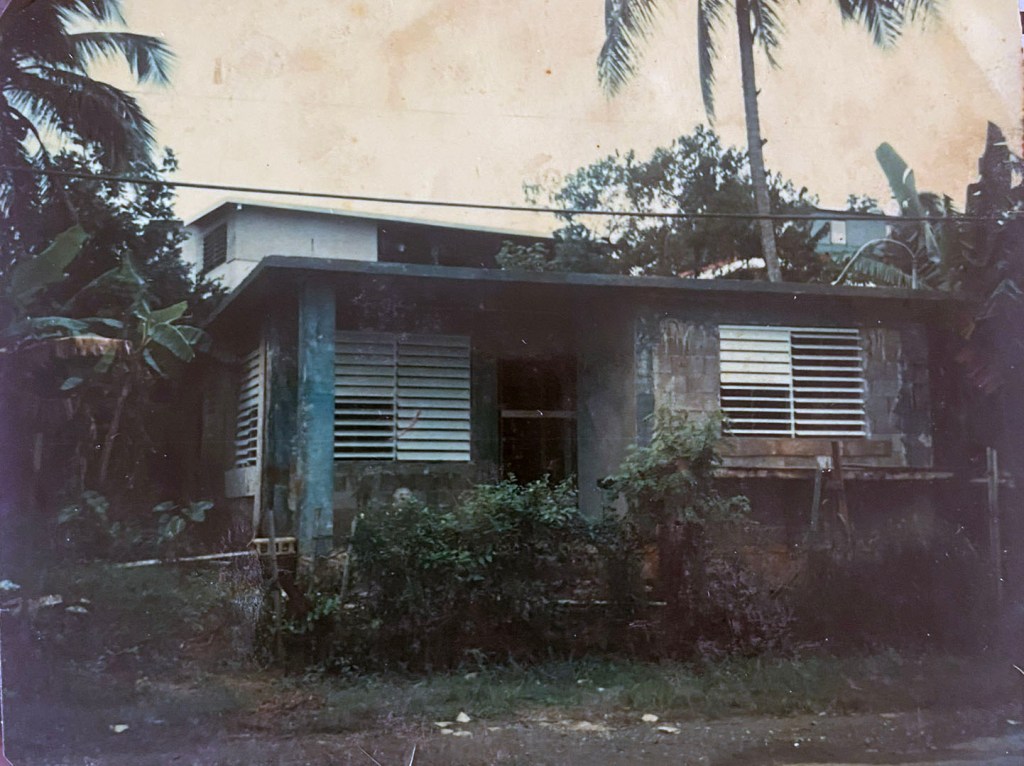
Two generations of my family made America their home to escape the colony. Two generations of struggle, occasional success, but mostly disappointment. The success my parents chiseled out of their lives as first generation Puerto Ricans was the exception in our family and some would call it the fulfillment of the American Dream. To them the lack of opportunity and baked in poverty back on the island was worse than the racism and assimilation that America offered. My father, escaping the projects of Brooklyn and drug addiction that plagued himself and each of his siblings. My mother, escaping an abusive home and attempted arranged marriage. Both finding each other on a summer day in Prospect Park and going on to build a life that defied the blueprint tailored for them. Six-figure salaries and homeownership that was only possible because of their commitment to seeing the other succeed. America was the scene of their accomplishments which were made in spite of the obstacles that same country put in their way. Being the beneficiary of those achievements meant I could go to college and hustle my way to that six figure tax bracket much easier than they did. In the midst of that process it became clear that, for me, genuine success meant going home – our real home – back to Puerto Rico.
I don’t consider my family revolutionary in the political sense. Blessedly they’re not MAGA Latinos, voting Democrat as long as I’ve been alive and socially liberal. As proud Nuyoricans, attending the Puerto Rican Day Parade was tradition but when it came to our cultural history – Puerto Rico’s place within the sphere of American influence and why our family had to leave at all – that was never discussed. I distinctly remember an elder neighbor asking if I knew what Operation Condor was and burning with embarrassment after responding “no.” I loved history so much growing up that I chose to major in it during college – unfortunately, my concentration was in European History and not Latin America (which wasn’t an option at all). My parents not teaching me about America’s shadow wars in the Caribbean and Latin America meant I’d have to learn on my own after college, starting with Eduardo Galeano’s Open Veins of Latin America. A book I’d bought on a trip to PR. The disappointment on the owner’s face when I asked in my halting Spanish if he had a copy in English I’ll never forget.
When the lockdown happened in 2020 I was forced to sit with myself without distraction. Hated it so much I relented to therapy. It’s doubtful my current path would have been possible without having gone. There were questions I asked myself during those sessions that could never have crossed my mind without reflection. The ability to name the generational tendencies I’d spent my twenties running from – occasionally unsuccessfully – was powerful. Noticing the betrayal of a country I came to understand only existed in my mind spurred me to find a response. I took a kickboxing class after Trump’s first election win in 2016 just to hit something. After George Floyd’s murder and the police brutality protests in the summer of 2020 I realized America was not going to get better. My job launched the obligatory White Fragility book club and I knew corporate America (a place I already hated) would only become more performative. My disposition to question authority, disdain for the police, and indignation towards the political establishment who claimed to have the solution left me with only one answer – I had to leave. I wasn’t quite giving up on the country so much as accepting what it (the idea of America) was – a lie.
I grew up spending my summers in PR with my grandparents. There was no joy in their home – it’d take them 50 years to finally agree to divorce after a lifetime of loveless marriage. Despite that, I never felt closer to myself than when I was there. Thinking back on church camp, visits to the Arecibo satellite (before its collapse), pilfering my grandma’s limber fridge, floods me with serotonin and joy. One day I realized PR was where I wanted to wake up in the morning. I felt a pull deep in my chest from the island. Every time I left there was a piece of me that stayed in PR. After bearing witness to the government’s comprehensive failure in the wake of María in 2017 and the protests against Rosselló in 2019 through social media, the urge to fight for a future where Puerto Ricans could stay in PR or come back if they were displaced grew. Unraveling this impulse brought me to the revelation that my assignment during this lifetime would be to decolonize my mind. I grew up watching my mother reject her native language to beat away her barely audible accent – all in service to assimilate in the hopes it would save her from being compared to “those loud Puerto Ricans” (my cousins). My grandparents were the only people who spoke our language to me. Being they knew English and never made me respond in Spanish I can understand it but to my shame still struggle forming complete sentences never mind holding full conversations (a psychological block more than anything else). This primary alienation from my culture – through its language – is a challenge I’ll confront for the rest of my life.
The prospect of a Puerto Rico without Puerto Ricans haunts me. After realizing I had to move, it took me five years to first get over the fear of leaving America then plan, save, and physically get back to my island. During that time it’s estimated nearly 100,000 Puerto Ricans left home. Population loss has been virtually uninterrupted since 2005 according to the Instituto de Estadísticas de Puerto Rico (IEPR). The ongoing exodus can be attributed to a convergence of countless circumstances of which most can be traced back to a decade of draconian austerity measures imposed by la Junta (the infamous Fiscal Oversight and Management Board). Established in 2016 under the PROMESA law – championed by high profile Democrats like Obama, Hillary Clinton, and DNC darling Lin Manuel Miranda (Hamilton will never be enough for me to forgive you LMM) – this board was given sweeping authority to administer Puerto Rico’s budget and address the island’s massive debt (unlike every other state, the island is barred from restructuring its debt under bankruptcy). This is an unelected group of 7 board members appointed by the U.S. President (another office Puerto Ricans can’t vote for) who operate independent of Puerto Rico’s local government. Here are some of their contributions to the island:
- The systematic dismantling of the education system resulting in nearly a third of public schools being closed (with another wave of closures announced this year impacting 83 more schools), a reduction of the school maintenance budget from $71M to $28M in two years, vicious budget cuts and tuition hikes to the island’s public university UPR (the institution’s funding slashed from $911M in FY 2017 to $566M in FY 2026).
- The elimination of the Equalization Fund which was a primary source of operating revenue for the island’s 78 municipalities and has disproportionately impacted rural towns with limited ability for revenue generation. Ten municipalities are currently classified as fiscally “unsustainable.” The President of PR’s Mayors Association directly linking the phase out of this fund to budget deficits and deteriorating infrastructure.
- Speaking of infrastructure – you may have heard the island is under a water rationing mandate in addition to constant blackouts. Since 2008 there’s been a 20% reduction in workforce within the water authority (AAA). Low wages and inequity between AAA employees and private contractors led to a union strike the week after water rationing was implemented by the Governor last month. La Junta was the driving force behind the electric grid’s privatization after Hurricane María in 2017. LUMA Energy, a private company with Canadian and Texan ownership, assumed distribution of the island’s power grid. Despite over 40% of the population living below the poverty line, Puerto Ricans pay higher rates for electricity than any other state except for Hawaii and California.
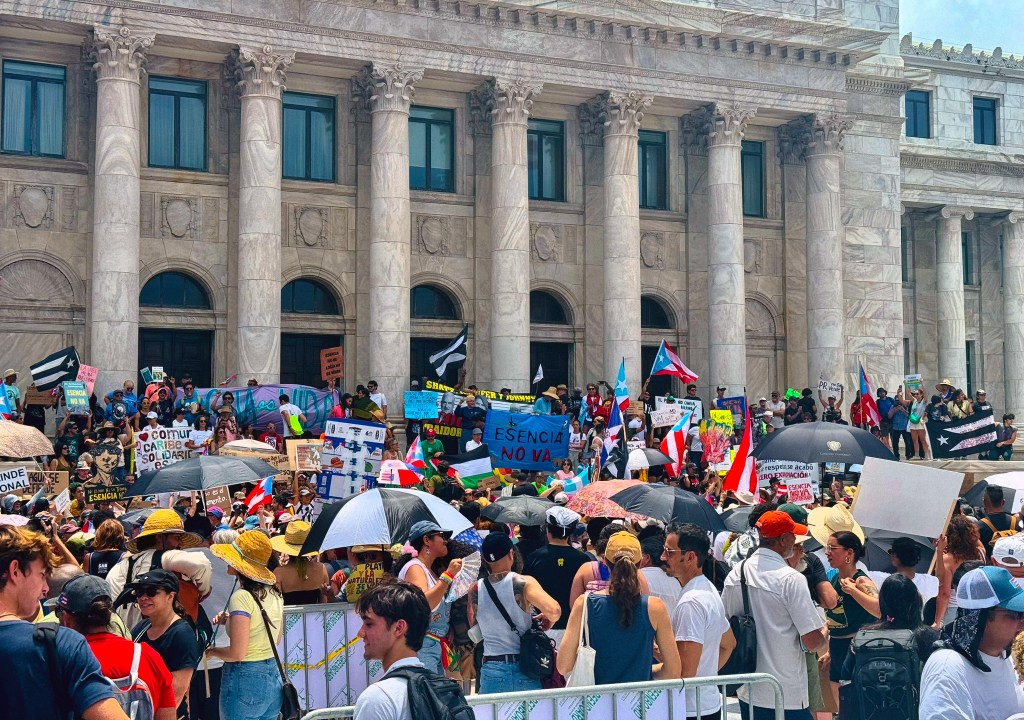
If that wasn’t enough, we also have our pathologically corrupt politicians continuously selling off chunks of land and resources to luxury hotel developers and crypto bros (this deserves its own essay). Despite these conditions I choose to be here because I’m lucky enough to be in a position to afford the cost. I don’t blame anyone who has had to or will make the difficult decision to leave – the government and their vulture investors have created an increasingly hostile environment for Puerto Ricans. Every piece of the machine is invested in regular Puerto Ricans leaving. That said, I know nothing will fundamentally improve if those of us who love Puerto Rico do not come back. This island is the oldest existing colony on the planet, but America is in the weakest position its had to endure since its founding. If there was ever a time to fight for independence it’s now. Reclaiming home, my occupied island, is the first step in my revolution.
 Cam Belle Writes